Play with real dealers in real-time with 32Red’s fully stacked live casino. From 32Red poker to baccarat and roulette, UK players can access it all!

32ted
DESIGNER:
Irwin Yachts “Classic 32”
Ted Irwin (1970)
Endeavour Yachts:
Modified in-house by Dennis Robbins.
PRODUCTION: 1975-1982
HULLS: Approx 600
SPECIFICATIONS
LOA: 32’4″
LWL: 25’6″
BEAM: 10’0″
DRAFT:
• Standard: 4’2″
• Centerboard: 3’6″ / 7’10”
DSPL: 11,700lbs
BALLAST: 5,000lbs
(internal lead)
DWL: 43′ 0″
SAIL AREA: 470 sq ft
100% FT: 257 sq ft
MAIN: 207 sq ft
I = 39’6″
J = 13’0″
P = 34’6″
E = 12’0″
HEADROOM: 6’3″
BERTHS: 6
FUEL: 20 gal (diesel)
WATER: 65 gal (hot/cold)
HOLDING TANK: 15 gal
STATISTICS
D/L RATIO: 315
(less than 100 = ULDB
100-200 = light,
200-300 = medium,
+300 = heavy)
SA/D RATIO: 14.59
(14 = low, 22 = high)
BAL/D RATIO: 42.73%
(33-45 is average, higher=more stablitiy)
LWL/BEAM: 2.55
(2.3=low, 3.0=high)
CAPSIZE RATIO: 1.76
(Less than 2.0 is prefered)
MOTION COMFORT: 30.38
(RANGE = 5 – 60: Higher number means more comfort in a sea)
HULL SPEED: 6.8 knt
ANGLE OF VANISHING STABILITY: 114°
PDF DOWNLOADS
D E S I G N&H I S T O R Y
The Endeavour 32 began life back in 1970 as the Irwin “Classic” 32. Ted Irwin designed her as a dual-purpose cruiser-racer before the development of IOR. By 1975, the IOR was in full swing, and boats such as the Irwin 32 were obsolete as racers, since PHRF had not yet emerged to help handicap non-competitive boats raced at the club level.
Although the Irwin 32 had been out-designed for racing, the hull was still a nice, clean, conservative, and comfortable design for cruising. The molds for the Irwin 32 formed the basis for Endeavour Yacht Corporation, which built about 600 Endeavour 32s until 1982. Our current membership records show hull 574 being built in January of 1982.
Although the Irwin 32 and the Endeavour 32 look identical and have the same displacement, the E32 is listed by the builder as 4″ wider, and 4″ longer overall, and 6″ longer on the waterline.
The Irwin 32 was originally available as a keel/centerboard boat drawing 3’6″, or with a long fin keel drawing 5′. The Endeavour 32 was originally built as keel/centerboarder with the same configuration as the Irwin 32 (3’6″ board up, 7’10” board down), or with a fixed shoal keel with 4’2″ draft. The original Irwin deeper keel was discontinued in 1979 in favor of the shoal keel version. Among the modifications were a different coach roof line and port configuration, cockpit coaming modification, additional interior storage and access, galley modification, integral companion way stairs, and a teak cabin sole.
H U L L&D E C K
The hull is molded as a single unit of a combination of polyester resin and fiberglass woven roving and multidirectional chopped strand fiber (MCSF). The keel is molded integrally with the hull and all ballast is contained inside. The deck and cockpit, like the hull, are molded as a single unit of a combination of polyester resin and fiberglass woven roving and MCSF. Plywood coring is incorporated between layers of fiberglass in the cabin top, deck, seat, and cockpit sole areas to give additional stiffness. The non-skid finish is molded into the deck. The exterior finish is pigmented gelcoat molded onto the fiberglass. The boot and sheer stripe are also gelcoat molded permanently into the hull.
The hull-to-deck joint is a ‘flange’ type, which during assembly, is liberally coated with a combination adhesive/sealant. The deck is then lowered onto the hull and fastened in place with stainless steel thru-bolts. The toe rail is then installed, bedded in a heavy layer of the same compound and secured in place.
There is an anchor well at the bow with a haws pipe feeding the anchor rode into the v-berth locker, there are teak grab rails on the cabin top and a large aft cockpit with good back rests and storage lockers. The companionway goes down to seat height, about 12″ above the cockpit sole, and has three drop boards.
R U D D E R&S T E E R I N G
The rudder is molded as a single piece of solid high density foam with a protective skin of fiberglass and a gelcoat finish. The rudder post, molded integrally with the rudder, is solid stainless steel, which is welded to a steel blade in the interior of the rudder. Where the rudder post passes through the hull, water tightness is ensured by means of a stuffing box.
The pedestal steering system (24″ Edson wheel) operates with stainless steel cables rotating a quadrant bolted and keyed to the rudder post.
S P A R S&R I G G I N G
All spars (mast, boom, and spreaders) are extruded aluminum 6061-T6 alloy, with a protective coating an all external surfaces. The main mast on the E-32 is stepped on deck with a supporting post immediately under the mast inside the cabin. The masts and booms we’ve seen on the E32 were Kenyon single spreader masts, and booms with single reefing capabilities and sheeting about 2/3s the way aft attached to a companionway traveler.
The standing rigging is made of stainless steel wire. The forestay attaches to the stem head fitting at the bow. This is fabricated of welded stainless steel backup plates and through bolted to the hull. All other stays and shrouds are attached to chainplates at the edge of the deck and are through bolted to the hull. Additional fiberglass reinforcement is molded into the hull in all chainplate areas. The forestay, backstay, and uppers are made of 1/4″ stainless steel wire, and the lowers are made of 3/16″.
All halyards were originally stainless steel wire rope with Dacron line tails to minimize stretch and reduce windage. All halyards are run externally to #32 Lewmar winches mounted on the mast. Sheets are led to #40 Lewmar self tailing winches in the cockpit. Sheet lead blocks clip to the toerail. The main sheet traveler is mounted on the companionway ‘bridge deck’.
I N T E R I O R
The interior of the Endeavour 32 is a molded fiberglass unit with bulkheads and cabinetry fastened to it with screws, bolts, and adhesives. The entire unit is pre-assembled outside the boat and then placed inside a hull with ballast and engine already in place. It is bonded in place with woven roving and mat, that when completed, forms a single unit structure having great strength and rigidity.
The interior is finished with varnished teak with soft white overheads. The cabin sole is teak parquet. The interior layout is typical with a V-berth forward, the head (to port) and lockers (starboard) divide it from the main salon area which has a fold-up dining table. The port side settee pulls out to create a double berth, the starboard is a single. Aft and to port is a pilot berth and to starboard is the galley which originally came with an icebox and either a gimbaled 3-burner alcohol or gas stove with oven. The electrical panel is located immediately under the companionway, and the stairs remove to allow access to the engine.
There are 10 opening ports (Beckson) and two large Atkins-Hoyle deck hatches (strong drop forged aluminum with 3/4″ Lexan), one each over the v-berth and salon area. Early model boats had 6 opening and 4 large fixed ports.
A U X I L A R Y
All Endeavour 32s came with diesel engines, but many different engines were used. In the 1975, 76, and 77 models, a 12hp Yanmar (1QM) diesel was standard equipment–fine for flat calms but not enough power to push to windward in any wind or sea. Some boats in the same period were equipped with the Westerbeke L-25 engine, and others with the Yanmar 2QM20 (22hp 2-cyl) which was available in the late 70’s. While the bigger Yanmar became standard in 1978, a 3-cylindar Universal diesel of about 24hp was also an option in late model boats. In the early 1980’s Yanmar replaced the QM series with the GM series engine. The 2GMD replaced the 2QM and Yanmar added the 3GMD (22hp 3-cyl) to the line.
Our 1982-E32 has the 3GMD series diesel engine and is fitted with a geared transmission. Many boats today however have upgraded their engines with the 2GM20 (18hp) and 3GM30 (27hp) engines which Yanmar introduced in 1983.
The propeller shaft is made of 1″ stainless steel and exits the hull through a stuffing box. It is supported at the inboard, or engine end, by the shaft coupling, and at the aft end by a cutless bearing in a cast bronze strut.
The propeller is a 16″ 2-blade prop although a 3-blade was an option.
The exhaust system utilizes the Vernalift Marine muffler. In Yanmar engines, the water pump draws water through the engine intake port, circulates it through the engine block, and then into the muffler. The water is mixed with the exhaust gases in the muffler and discharged overboard through the exhaust port.
E L E C T R I C A LS Y S T E M
Virtually all wiring is located high and accessable by removing panels from under the side decks. All wiring is 10 gauge stranded copper with crimp type connectors used at all junctions or terminals. All wiring is color coded with DC wiring as two wire and AC as three wire. Metallic fittings (through hulls, etc.) below the water line are electrically bonded together with 8 gauge copper wire and connected to the ships common ground. The standard battery configuration consisted of two 12-volt batteries connected in parallel to allow single or combined use and charged from the stock 35 amp Hitachi alternator.
S OW H A TD O E ST H I SA L LM E A N ?
I’m sure I’m not alone when I look at any given boat and think to myself “but what kind of boat is she really?” Sure, we can read through all the stats and reviews, but what does all that really mean, how does the boat really sail.
When we look at the numbers of the E32 we see a moderate boat, however this can be deceiving. First lets look at the displacement to length ratio. At 315 there’s nothing to write home about especially when we look at other cruising boats on the market today with numbers in the 200’s. This number however is very deceptive since the E32 is relatively narrow and heels early, thereby extending the waterline significantly. When the wind picks up, she’s a wolf in sheeps clothing. Also, displacement figures are not very reliable when it comes to cruising boats and the loads they carry. Just think of all that “stuff” you need to bring aboard for any type of cruise and how that will affect any boats performance. Realistically her displacement and wetted surface area keep her from moving in very light air. As the wind picks up (+10kts), she gains speed and the water line begins to stretch out. Her narrow beam allows for good directional stability and keeps the bow from “digging” in like many wide stern boats being built today.
As for the sail area to displacement ratio we see a low one registering in at 14.59. Basically this tells us that for this given size boat we have a small sail area and therefore small sails. This means it’s a bit easier to handle and doesn’t require an early reef. The trade off however is less “horsepower” in lighter winds. We can typically sail with a full sails (main+150) to about 20knts apparent. With a stout mast and simple but sturdy rig setup, there’s little to pay attention to here once the mast has been properly tuned. Other trade offs can be found in the outboard placement of the shrouds and lack of inboard tracks which prevent the boat from performing as well when close to the wind. However we regularly sail as close as 45° in a breeze, less so in lighter air. To compensate for the light air sailing in our region (Chicago) we have a 150% genoa and an asymmetrical spinnaker that make a big difference. Designed primarily for sailing the Florida Keys, Bahamas, and Caribbean Islands she loves reaching conditions, and as her waterline stretches out she really gets moving. I’ve found that we can regularly expect 7knts on the speedo and have experienced 10knts while surfing down 4-6ft swells in a following breeze. She can become a bit ‘squirrely’ when sailing down wind–this a result of a number of factors. Any boat can loose steerage when waves overtake a boat, but the curvy stern and shallow fins tend to increase this tendency. We tend not to sail dead down wind as a result (about as far as 150°), and watch the sail trim to minimize the rolling motion from seas on the aft quarter.
One admirable characteristic of the Endeavour 32’s performance is that the hull almost never pounds in a seaway and the boat can be easily handled by a small crew. So many times, heavier cruisers turn in faster passages than lighter ones simply because the crew is better rested from not having to micromanage the boat.
It’s a simple, forgiving, stout cruising boat.






©1995-2025 THE ENDEAVOUR OWNERS GROUP
Up The Ante With 32Red Live Casino
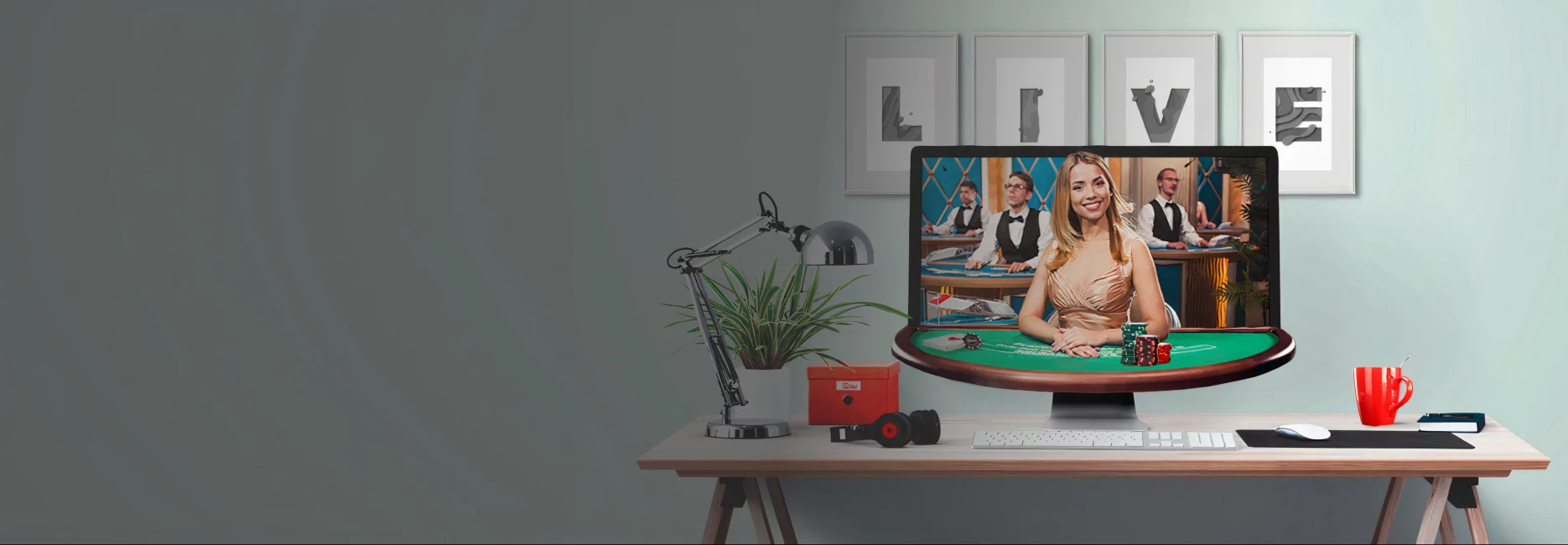
32Red live casino has a wide selection of titles that players can choose from, whether playing on desktop or mobile. The best part? Players can claim and use bonuses while playing live dealer games too!
What UK Players Can Expect From 32Red Live Casino
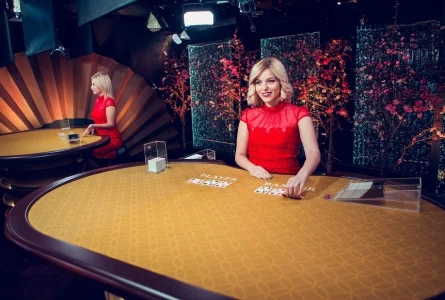
The 32Red online casino has a wide selection of titles for every type of gambler. However, the most intriguing games for UK players can be found in the live casino at 32Red. This type of game is played in real-time and is streamed from a studio. The player can follow each round through a video stream and place their bets on a virtual board. The live casino at 32Red is fully stocked with titles and games including poker, blackjack, baccarat and TV Shows.

Live Poker Options At 32Red
Poker is by far one of the most popular table games at casinos, and that is the case at 32Red too. While this operator does not offer poker tables to play against other players, it is possible to play Casino Hold’em. UK players will find several variations of poker at 32Red including Caribean Stud Poker, Texas Hold’em, and Side Bet City Poker to name a few.
Playing Live Blackjack At 32Red
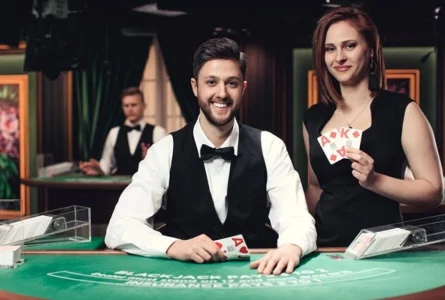
Most people go to the casino to play blackjack. It is an all-time classic that is always available in the casino. Therefore, it is good news that this game can also be played in the 32Red live casino against a professional dealer and be able to chat with them! There are also exciting variants available like Lightning Blackjack and Speed Blackjack.
Live Baccarat Choices At 32Red
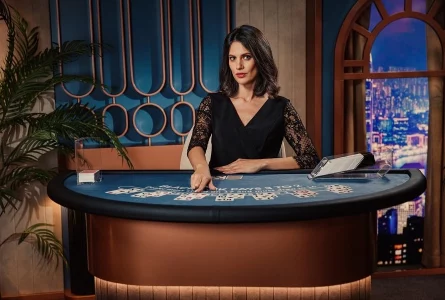
Baccarat is a card game that is very popular in Asian countries. In the UK, it is less common than blackjack and roulette. However, if you would like to try it out, the 32Red live casino has different tables available. Moreover, you can wager as low as you wish to slowly learn the rules. Players will find titles including Peek Baccarat Live, Real Baccarat With Holly, and Speed Baccarat in the 32Red live casino.
Participating In Live Game Shows At 32Red
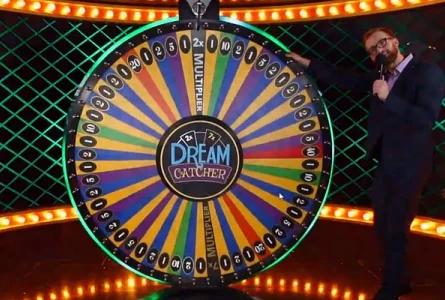
A lot of people have probably watched a game show on the telly and wondered how it would be to participate in it. At 32Red, you can find live game shows that you can actively participate in and win prizes with. These titles are set up as a proper game show with a charismatic host in a flashy studio. A couple of good examples featured at 32Red are Monopoly Live and Crazy Time.
Top Live Casino Game Providers At 32Red
The most renowned developers for live casino games at 32Red are Evolution Gaming and Pragmatic Play. These providers ensure their live game titles never disappoint to surprise and entertain the player. From Evolution Gaming UK players at 32Red can look forward to classics such as Lightning Roulette, Monopoly Live and Crazy Time. Titles from Pragmatic Play include Sweet Bonanza Candyland and Power Up Roulette.
Getting Started With 32Red’s Live Casino
Visit 32Red using desktop, tablet, or smartphone
Click on the ‘Sign Up’ button, and create an account
Make your first deposit and claim your welcome bonus
Navigate to the live casino, choose a game and place your bets


Start Playing At 32Red Live Casino
Get in the thick of things and experience the live action of 32Red Casino. Follow the simple sign-up process and start playing today.
Special Live Casino Promotions At 32Red
From time to time 32Red provides specially designed promotions to suit their live casino games. When standard welcome bonuses that provide match credit are in place the credit can usually be used on live casino games as well as slots. With game shows being actively introduced to 32Red members, promotions are constantly being focused on players to get the most out of their participation.

Accessing 32Red Live Casino On Mobile
Players can also use the 32Red mobile casino to access live dealer games. The same features from the desktop can also be used on smartphones and tablets, like the live chat and video quality settings. However, it is important to have a stable internet connection on your phone to prevent the video from lagging.
32Red Live Casino Frequently Asked Questions
Find the answers to the most frequently asked questions about the live dealer games at 32Red right here.
What are the best games to play?
This is a very personal question, as every player has their own preference for gambling. However, the 32Red selection of titles is very diverse, and there is something for every type of gambler, from classic table games to exciting game shows.
Which title has the best RTP?
RTP stands for Return to Player, which is a percentage that shows how much you will receive back from your wagers. There is no particular table game that has the highest RTP. However, some bets on roulette have a very high chance to lead to a payout. For example, betting on black/red or even/uneven.
How can I play in the live casino?
If you want to play in the live casino of 32Red, you first need to create an account. You can do this by sharing your personal details with the operator. Then, you need to verify this information with some identification, like an ID card and proof of address. At last, you can make your first deposit and start betting.
What is the difference between virtual and live games?
Virtual table games use software to predict the outcome. This is called RNG software, also known as the Random Number Generator. This program calculates what the next numbers, symbols or cards are going to be. Live dealer games are played in real-time and filmed in a studio.
What happens when I lose my connection?
To be able to play live dealer games, you need a stable internet connection. It can of course happen that you lose your connection. If you have already placed your bet, that wager will be put into play. After you have reconnected again, you can check if you have won the bet.
https://www.endeavourowners.com/boats/e32/e32specs.html
Author